
Winter Bird Feeding: What to Offer and How to Keep It Safe
Learn which foods and feeders work best for winter birds, where to hang them, how often to clean them, and what to avoid in the US and UK.
 Save
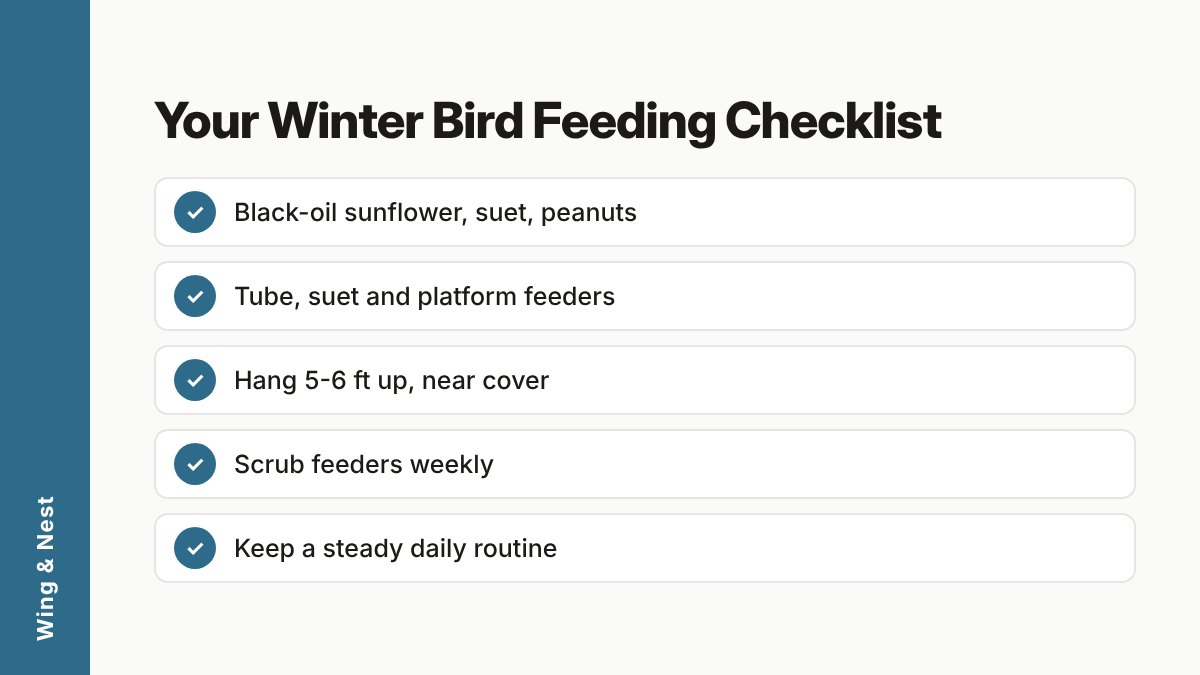
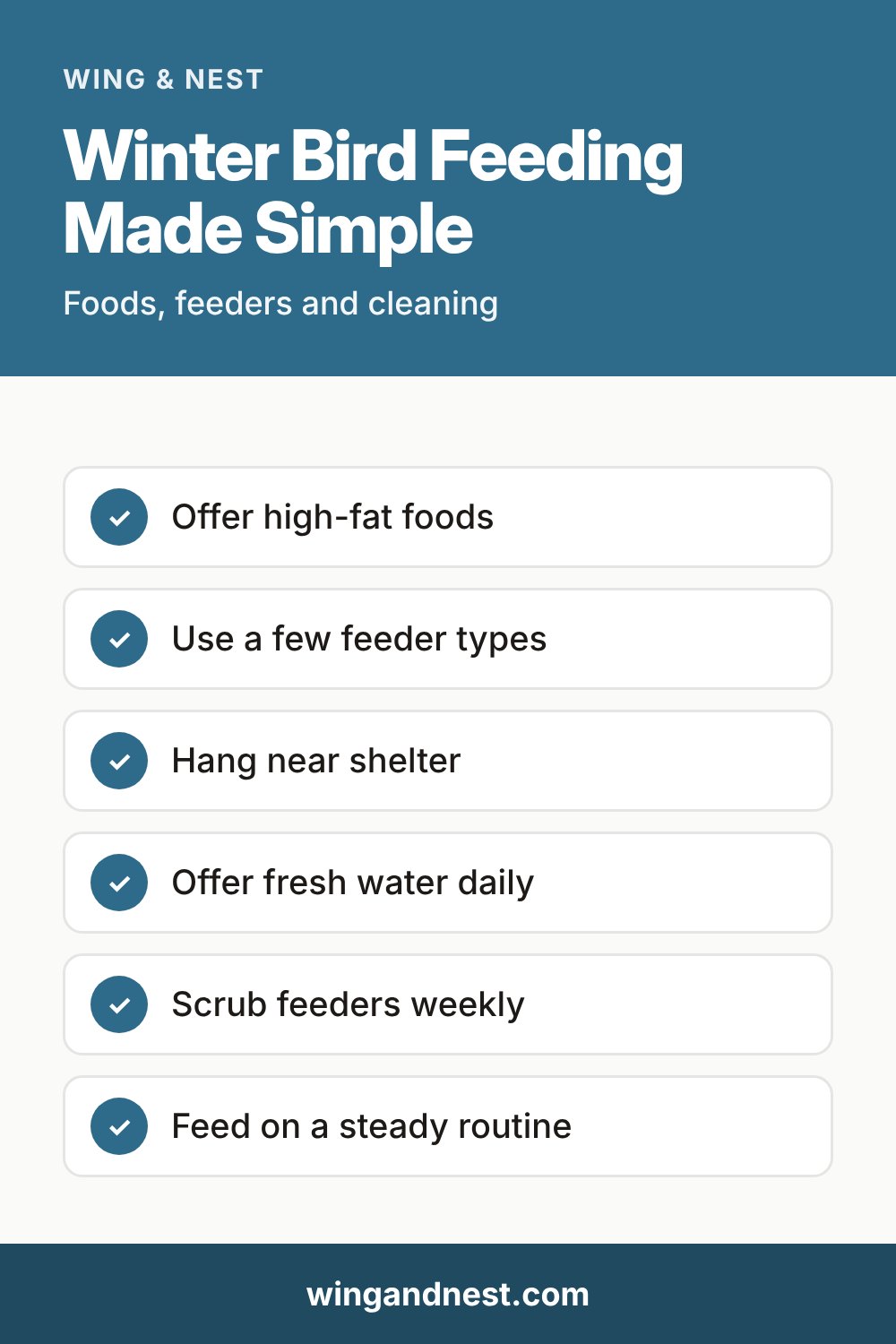
The best winter bird feeding plan is simple: offer high-fat foods such as black-oil sunflower seed, suet and peanuts, hang a few feeders in sheltered spots near cover, and clean them regularly. Feed on a steady routine so birds can count on you through the coldest weeks.
November is a good time to start. Natural food gets scarcer, nights get longer, and birds need energy to stay warm. Below you will find what to put out, where to hang it, and the hygiene habits that keep the visitors healthy.
Quick answer
- Food: black-oil sunflower seed, suet or fat mixes, and unsalted peanuts.
- Feeders: a tube or hopper feeder for seed, a mesh or cage feeder for suet and peanuts, and a platform feeder for larger birds.
- Placement: near shrubs or trees for shelter, but not so close that predators can hide beside the feeder.
- Cleaning: regular soap-and-water scrubs, and a quick disinfect when things get wet or moldy.
- Routine: put out about as much as birds will eat in a day, and keep doing it.
Best foods for winter birds
Birds burn a lot of energy keeping warm, so fat and oil-rich foods matter most. Black-oil sunflower seed is a favorite of extension specialists because it is high in fat and the shells are thin, so small birds can open them easily. Cheaper seed mixes often contain fillers such as milo and hulled oats that birds simply pick through and leave on the ground.
Suet and peanut butter are also high-energy options, served in mesh feeders or on open platforms. Peanuts bring in chickadees, nuthatches and woodpeckers. Smaller seeds such as millet and nyjer (also called niger or thistle) attract juncos, mourning doves and goldfinches.
In the UK, the Woodland Trust lists seeds and peanuts as winter foods, from November to April. Suet and fat mixes can go out all year, but fat balls melt in summer, so skip them in hot weather. Sunflower hearts suit greenfinches and tits, nyjer suits goldfinches, siskins and redpolls, and windfall apples suit thrushes.
| Food | Who it suits | Notes |
|---|---|---|
| Black-oil sunflower seed | Cardinals, jays, finches, chickadees | High fat, thin shell, good all-rounder |
| Suet or fat mixes | Woodpeckers, nuthatches, insect-eaters | Use a mesh or cage feeder |
| Unsalted peanuts | Chickadees, nuthatches, woodpeckers, tits | Offer in a mesh so birds take small pieces |
| Millet | Juncos, mourning doves | Scatter or use a platform feeder |
| Nyjer (thistle) | Goldfinches, siskins, redpolls | Needs a feeder with small holes |
| Windfall apples | Thrushes, waxwings | Put out on the ground or a tray |
Foods to skip
- Cracked corn and milo in the US, which mostly draw house sparrows and starlings that can crowd out other birds.
- Salted peanuts or salted rice, and any moldy food.
- Cooked porridge. Uncooked porridge oats are fine.
- Grapes, raisins and sultanas if you have a dog, since they can be toxic to dogs.
- Bread. It is not harmful, but it gives birds very little nutrition.
Choose the right feeders
Using several feeder types draws more species and reduces squabbling.
- Tube feeders keep seed dry and suit small birds such as chickadees and finches.
- Hopper or house-style feeders are a good starting point for beginners. Pick one with a roof or drainage holes so seed does not clump or turn moldy.
- Platform feeders suit larger birds like doves and jays, but they need frequent cleaning.
- Suet feeders give woodpeckers and other insect-eaters the fat they want.
- Ground feeding also works. Crumbled fat balls and seed scattered under shrubs help blackbirds, dunnocks and wrens.
If squirrels take everything, move the feeder to a hard-to-reach spot or choose a squirrel-resistant model.
Where to put your feeders
Placement affects both how many birds come and how safe they are.
| Question | Guidance from extension and wildlife sources |
|---|---|
| How high? | About 5 to 6 feet (1.5 to 1.8 m) off the ground |
| How close to cover? | Near trees or shrubs for shelter, but around 10 feet (3 m) away so cats cannot lurk beside the feeder |
| Near windows? | Within 3 feet (1 m) of the glass or more than 30 feet (9 m) away, to reduce collisions |
| Near the house? | Close enough to refill easily in a snowstorm |
| More than one feeder? | Spread them apart to reduce crowding and stress |
For window collisions, stick-on window feeders are another option, as the feeder sits so close to the glass that birds cannot build up speed.
Step-by-step winter feeding plan
- Pick two or three feeder types. For example, a tube feeder with black-oil sunflower, a suet cage and a small platform.
- Hang them in a sheltered spot at the heights and distances in the table above.
- Fill with fresh, dry food. Put out roughly what birds will eat in a day, so nothing sits and spoils.
- Be patient. Birds can take a while to find a new feeder.
- Keep a daily or regular routine. Cold snaps are when a missing meal hurts most.
- Offer water. Change bird bath water daily and let the bath dry before refilling. In freezing weather, a small ball floated on the surface helps stop it from icing over.
- Clean on schedule. See the next section.
- Carry on into late winter and early spring, when natural food is still scarce.
Keep feeders clean
Dirty feeders and crowded birds can spread disease. Follow this routine:
- Weekly: scrub feeders with hot soapy water and rinse thoroughly. Use separate brushes and sponges for feeders and baths, and wash your hands afterward.
- When wet or moldy: a 10% non-chlorinated bleach solution is one extension recommendation for feeders with moldy or wet seed or droppings. Rinse well and let everything dry before refilling.
- Daily: sweep up spilled seed and droppings so they do not build up under the feeder.
- Every few months: move feeders a little to reduce mess, pests and territorial behavior.
If you see sick birds, stop feeding, clean the feeders thoroughly, and store them for a couple of weeks before starting again.
Common mistakes
| Mistake | Better approach |
|---|---|
| Buying cheap mixed seed full of filler | Choose black-oil sunflower or a high-quality blend |
| Overfilling feeders | Offer about a day’s worth so food stays fresh |
| Hanging feeders far from any cover | Place them near shrubs or trees, but about 10 feet from dense hiding spots |
| Stopping suddenly in a cold snap | Keep a regular routine through winter |
| Never cleaning | Scrub weekly and disinfect wet or moldy feeders |
| Putting out salted or moldy food | Use unsalted, fresh foods only |
When to pause or get advice
Stop feeding and clean thoroughly if you notice sick birds around your feeders. If a bird is injured or you are unsure what to do, contact a local wildlife rehabilitator, or your local wildlife trust or animal welfare organization.
Sources
 Save
Frequently asked questions
What is the best food to put out for birds in winter?
Black-oil sunflower seed is a strong all-round choice because it is high in fat and its thin shell is easy for small birds to crack. Add suet or fat mixes for extra energy, and peanuts in a mesh feeder.
Should I keep feeding birds all winter once I start?
Yes, try to keep a steady routine through late winter and early spring. Birds can come to rely on a feeder for part of their diet, and sudden drops in food can hurt them in cold weather.
How often should I clean bird feeders?
UK guidance suggests scrubbing feeders weekly with hot soapy water and rinsing well. Also clean any time you see wet seed, mold or heavy droppings.
Is bread good for birds?
Bread is not harmful in itself, but it offers little nutrition. Fat, seeds and peanuts do far more for a bird in cold weather.